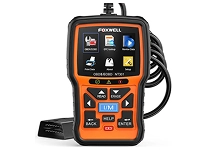
Explore Diagnostic Test Measurement Tools
Diagnostic test measurement tools help technicians, engineers, maintenance teams, and hands-on users identify faults, verify performance, and measure electrical or electronic conditions. The category includes digital multimeters, clamp meters, oscilloscopes, insulation resistance testers, thermal imaging cameras, power quality analyzers, and circuit or network testers. Each tool is designed for a different kind of signal or condition, so choosing by the task is more useful than choosing by product name alone. A multimeter can check voltage, resistance, and continuity, while an oscilloscope displays changing signals over time. Clamp meters measure current without opening a circuit, and thermal cameras reveal temperature patterns that may indicate a problem. Ubuy provides a place to discover diagnostic instruments and related accessories from international product ranges. Start by identifying the system, measurement, and working environment you need to evaluate.
- Tools for electrical, electronic, and maintenance diagnostics
- Options for measuring signals, current, temperature, and continuity
- Choose according to the fault-finding task
Compare Common Tester and Meter Types
Digital multimeters are versatile choices for checking voltage, resistance, continuity, and, on some models, capacitance, frequency, or temperature. Clamp meters suit current checks on conductors that can be safely accessed by the jaw; some also include standard multimeter functions. Oscilloscopes help analyze waveform shape, timing, noise, and transient behavior, with bandwidth and sample rate affecting the signals they can capture. Insulation testers apply a test voltage to assess insulation resistance, while earth or ground testers support checks of grounding systems. Thermal cameras and infrared thermometers help locate temperature differences without contact. Automotive scan tools read vehicle diagnostic information, and cable or network testers check wiring and connectivity. A power quality analyzer can record voltage, current, harmonics, and related supply conditions. Match the instrument to the measurement rather than expecting one device to perform every diagnostic task.
- Multimeters and clamp meters for electrical checks
- Oscilloscopes and analyzers for changing signals and supply quality
- Thermal, insulation, automotive, and network testing options
Check Accuracy, Safety, and Essential Features
Compare measurement range, accuracy, resolution, and the type of signal a tool can handle. Accuracy describes how close a reading may be to a reference value, while resolution indicates the smallest displayed change; neither replaces selecting a suitable range. For oscilloscopes, consider bandwidth, sample rate, channel count, and memory depth in relation to the signals being inspected. For meters, useful features may include auto-ranging, true RMS measurement for certain non-sinusoidal signals, continuity alerts, data hold, and a readable display. Safety is especially important when working around electrical systems: check the instrument's measurement category and voltage rating, use compatible leads and probes, and follow the manufacturer's instructions. A rugged case, clear controls, and accessible battery or fuse compartments can also matter in regular field use. Treat specifications as a comparison guide and verify that the tool suits the intended system and procedure.
- Compare accuracy, range, resolution, and signal capability
- Review ratings and accessories for the intended electrical environment
- Consider display, controls, and practical durability
Match Tools to Workflows, Accessories, and Applications
The best diagnostic setup depends on where and how measurements are taken. Electronics repair may call for a bench multimeter, oscilloscope probes, and a stable power supply, whereas building maintenance can require a clamp meter, voltage detector, and thermal camera. Industrial troubleshooting may involve insulation testers, process calibrators, or power quality instruments. Automotive work can benefit from scan tools and suitable test leads, while structured cabling tasks may need network or cable testers. Check what comes with the instrument and what must be selected separately: probes, test leads, current clamps, temperature sensors, carrying cases, batteries, and software can affect usability. Confirm connector types, probe ratings, and whether accessories are designed for the intended instrument. Ubuy can help shoppers explore tools and accessory options across international product ranges. Comparing the complete setup, not just the meter, helps avoid gaps when a measurement task begins.
- Choose tools around the work setting and diagnostic workflow
- Check probes, leads, sensors, and software requirements
- Verify accessory fit and instrument compatibility
Consider Compatibility, Calibration, and Care
Before purchasing, check that an instrument supports the system and measurement method you plan to use. This can include voltage and current ranges, AC or DC operation, frequency response, probe connections, data interfaces, and software compatibility. If the tool will be used with existing equipment, verify connector styles and required adapters rather than assuming they fit. Calibration needs depend on the instrument, usage, and the procedures followed by the organization; consult manufacturer guidance and applicable workplace processes. Keep tools clean and dry as directed, inspect leads and probes for damage, replace batteries when needed, and store instruments in a protective case. Do not use equipment with cracked housings, exposed conductors, or damaged insulation. Follow operating instructions for each test, especially when working with energized circuits or high test voltages. Careful handling and appropriate verification help maintain dependable measurements and extend the useful life of diagnostic equipment.
- Confirm ranges, interfaces, and connection compatibility
- Follow manufacturer guidance for calibration and verification
- Inspect, clean, and store tools according to instructions
Select the Right diagnostic test measurement tools
Narrow your choice by listing the measurements you perform most often, the systems involved, and the conditions in which you work. Select a dedicated tool when a task calls for a specific capability, such as waveform analysis, insulation testing, or non-contact temperature imaging; choose a multifunction meter when routine electrical checks are the priority. Compare specifications that affect real tasks, including range, accuracy, resolution, response, safety ratings, and compatible accessories. Consider whether you need data logging, a backlit display, wireless transfer, or a portable design, and confirm that any software or probes suit your setup. Read product specifications carefully and distinguish included accessories from optional add-ons. Ubuy offers a way to browse diagnostic instruments for different testing needs and compare product details before deciding. A well-matched tool can make fault isolation more organized, support consistent checks, and help you work with greater confidence.
- Prioritize your most frequent measurements
- Compare specifications and included accessories
- Choose a tool suited to your workflow and environment